

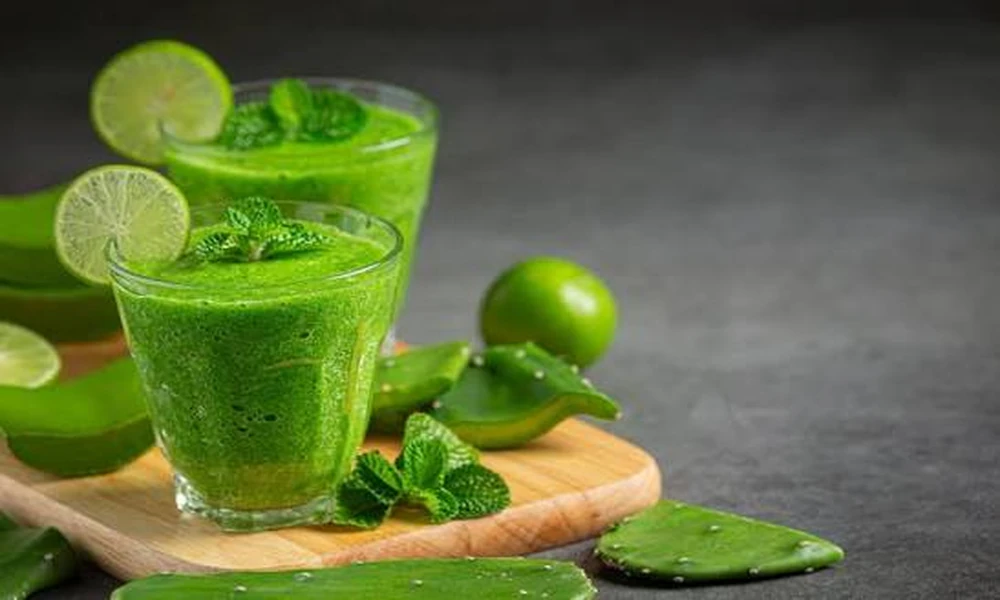
Karela juice in the morning. Jamun seed powder in the kitchen cabinet. Gudmar tucked inside an Ayurvedic formulation. For generations, Indian households have encountered these ingredients separately. But today, they are increasingly appearing together in formulations designed around healthy sugar management. That raises a useful question: when several familiar Ayurvedic ingredients end up in the same bottle, is the formulation simply combining home remedies, or is something more deliberate happening? To understand that, it helps to look at what we actually know about the three ingredients individually first.
Karela: familiar at home, but still being studied clinically
Karela, or bitter gourd (Momordica charantia), is probably the ingredient most closely associated with sugar-conscious diets in India. Its bitter fruit contains several biologically active compounds that researchers have investigated for their possible effects on glucose metabolism. Human evidence, however, is not completely settled.
A 2024 systematic review and meta-analysis of eight randomized controlled trials involving 423 people with type 2 diabetes found that bitter melon supplementation was associated with improvements in fasting glucose, post-meal glucose and HbA1c compared with controls.
Jamun: promising, but the evidence is still developing
Jamun (Syzygium cumini) has an equally familiar place in traditional Indian food and Ayurveda. The fruit is widely eaten, while the seed is particularly common in traditional formulations concerned with sugar wellness.
Clinical evidence for Jamun has historically been much thinner than its traditional reputation would suggest. A newer 2026 systematic review and meta-analysis of randomized trials involving Syzygium cumini and related plants gives a useful picture of where the science currently stands.
Across 13 trials involving 802 participants, the researchers found a modest improvement in fasting glucose. Effects on post-meal glucose and HbA1c were not statistically significant, and the authors rated the certainty of much of the evidence as low or very low because the studies differed substantially from one another.
Jamun therefore sits in an interesting space: strong traditional recognition, growing clinical interest, but not yet the kind of evidence that supports sweeping conclusions.
Gudmar: a less familiar ingredient with an interesting evidence base
Gudmar, or Gymnema sylvestre, may not be as instantly recognisable as Karela or Jamun, but it appears frequently in more comprehensive Ayurvedic sugar-management formulations.
So, what does Gudmar (Gymnema) do for blood sugar?
Researchers have studied Gymnema extracts for their possible influence on glycaemic control. A systematic review and meta-analysis of 10 studies involving 419 participants reported improvements from baseline in fasting and post-meal glucose as well as HbA1c.
A later meta-analysis of randomized controlled trials in adults also reported improvements in fasting blood sugar, although the researchers specifically cautioned that the available studies showed considerable heterogeneity and that stronger trials are still needed. That makes Gudmar a good example of why Ayurvedic ingredient research needs nuance. There is enough evidence to make the herb worth investigating further, but not enough to treat it as a standalone solution.
Why combining the ingredients is not the same as mixing three home remedies
This is where modern Ayurvedic formulations become more interesting. If Karela has evidence of its own, and so do Jamun and Gudmar, it may seem logical to assume that putting them together simply combines their individual benefits.
Science does not quite work that way. Once multiple herbs are combined, you have a new formulation. Their quantities may differ. The method used to extract them matters. Other herbs may be added around them. The resulting product therefore needs to be evaluated on its own rather than borrowing every claim ever made about each ingredient individually.
Kapiva’s Dia Free Juice would be an ideal example in this case. Rather than being a Karela-Jamun juice with one additional herb, it combines 11 Ayurvedic ingredients, including Karela, Jamun and Gudmar alongside Methi, Vijayasar and others. The published research paper on the formulation notes that it is prepared using a combination of swarasa and kwatha Ayurvedic preparation methods.
That distinction matters because the question is no longer simply whether Karela has been researched. It becomes whether this particular combination, in this formulation and at this dose, has been evaluated.
What happens when the complete formulation is studied?
Kapiva’s Dia Free Juice was examined in a 90-day, open-label clinical study involving 30 participants who continued their regular prescribed medication.
Participants consumed 30 ml of the juice diluted in water twice daily, and researchers monitored fasting glucose, post-meal glucose and HbA1c during the study. Improvements from baseline were reported across several measures.
There is an important limitation: the study was single-arm and open-label, so there was no placebo group against which the changes could be compared. That means it should be treated as supportive product-specific evidence rather than definitive proof of cause and effect.
This is still a meaningful step beyond assuming that a formulation works simply because its ingredients have long histories of traditional use.
How should Karela-Jamun juice be taken?
There is no universal dosage for every Karela-Jamun product because the concentration and formulation can differ between brands.
That is why the directions on the individual product matter more than a generic home-remedy rule.
For example, Kapiva recommends mixing 30 ml of Dia Free Juice with water and consuming it twice daily, with continued use built around a regular routine. The brand recommends staying consistent for at least three months. Interestingly, the published clinical study also used 30 ml twice daily for 90 days, so in this case the consumer usage recommendation broadly mirrors the regimen that was clinically evaluated.
The same dosage should not automatically be copied for another juice with a different formulation.
How long should someone use these ingredients?
Ayurvedic sugar-support products are generally positioned around consistent use, not an immediate effect after one serving.
But there is no scientifically established universal period after which Karela, Jamun or Gudmar will produce a particular result in every person.
Trials of the individual ingredients vary substantially in duration. Kapiva’s Dia Free study ran for 90 days, while its current product guidance also recommends at least three months of consistent use. That makes three months relevant to this particular formulation, not a general rule for every Ayurvedic juice.
The ingredient matters. The formulation matters more.
Karela is probably the most researched of the three in the context of sugar management, although clinical findings remain mixed. Jamun has promising but still uncertain human evidence. Gudmar has produced encouraging results in reviews, while researchers continue to call for stronger trials. Taken individually, each tells one part of the story.
A multi-herb Ayurvedic formulation asks a different scientific question: what happens when these ingredients are deliberately combined and consumed together?
That is why consumers looking at sugar-support products should look beyond the front label. Knowing that Karela or Jamun is present is useful. Knowing the complete formulation, the recommended routine and whether that finished product has actually been studied tells you considerably more.
