

You have decided to try pilates. Now comes the practical part: which kind of class, how often, what it costs in the Tricity, and how to tell a well-run studio from one that simply owns a reformer. This guide covers the decisions you will actually face when booking, not the theory of the method.
Mat vs reformer: which class should you book?
Mat classes use your body weight, sometimes with a ring, band or small ball. They are cheaper, can take larger groups and are easy to continue at home. The catch is that they can be harder for beginners: without springs to support you, poor form shows up quickly and weak cores tire fast.
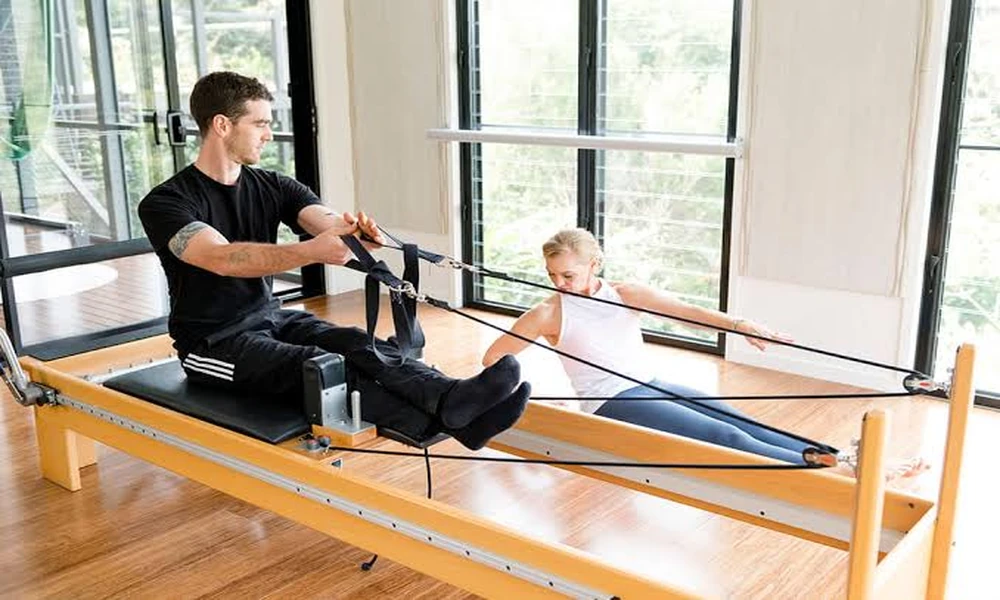
Reformer classes use a sliding carriage attached to springs. The springs can resist or assist, so the same exercise can be made easier for a beginner or harder for an athlete. Groups are small because each person needs a machine. Reformer is usually the better entry point for anyone with back or neck complaints, lower fitness, or who wants closer correction.
| Mat | Reformer | |
|---|---|---|
| Group size | 8-15 | 3-6 |
| Beginner-friendly | Moderate | High |
| Cost per class | Lower | Higher |
| Home carry-over | Easy | Limited |
| Best for | Budget, flexibility of timing | Posture issues, rehab, precise feedback |
Beginner vs advanced: how classes are levelled
Well-run studios level their timetable rather than mixing everyone:
- Foundation or Intro (level 1): breathing, pelvic neutral, basic spring settings, 6-10 core exercises. Expect to spend four to eight sessions here.
- Intermediate (level 2): faster flow, more standing and kneeling work, rotation and balance challenges.
- Advanced (level 3): full-body sequences, heavier or lighter springs used deliberately, inversions and long levers.
Be wary of a studio that puts a first-timer straight into an “open level” reformer class with regulars; it is a common reason beginners drop out.
For a plain explanation of the method before your first visit, this short primer on pilates classes in Chandigarh covers what the equipment does and what the first few sessions aim to teach.
Formats and timings you will see
- Group classes: 50-55 minutes, booked per class or on a monthly package.
- Private (1:1): 55 minutes, often used for the first two or three sessions, for injuries or for people who prefer not to train in a group.
- Duet or trio: two or three people sharing one instructor; a good middle ground on cost.
- Prenatal and postnatal classes: run by specially trained instructors, with medical clearance required.
Typical timetables in Chandigarh run morning slots from around 6:30 am to 10 am and evening slots from 5 pm to 8:30 pm, with lighter midday schedules. Working professionals should check how far in advance you must book and what the cancellation window is, since reformer slots fill quickly.
Costs to expect in Chandigarh (indicative)
Prices vary by studio, equipment, instructor experience and location, so treat these as approximate ranges rather than quotes:
- Mat group class: roughly ₹500-₹1,000 per session; monthly packages of 8-12 classes around ₹4,000-₹9,000.
- Reformer group class: roughly ₹1,000-₹2,000 per session; monthly packages around ₹8,000-₹18,000.
- Private reformer session: roughly ₹2,000-₹4,000, sometimes more for senior instructors or clinical sessions.
- Trial class: often free or ₹500-₹1,000, sometimes adjusted against a package.
Studios inside larger wellness centres, which may bundle recovery services like sauna or compression therapy, tend to sit at the upper end. Always confirm the exact price, package validity and freeze policy with the studio before paying.
Questions to ask the instructor before you join
- What is your certification, and how many hours of practical training did it involve? Comprehensive programmes run into several hundred hours; a weekend course is not the same thing.
- Do you do an assessment before my first class? Posture, breathing and injury history should be checked.
- What is the maximum group size on the reformer? More than six per instructor makes correction difficult.
- How do you modify for back pain, knee issues or pregnancy? The answer should be specific, not “we will manage”.
- Can I move between levels, and who decides? Progression should be based on form, not on how many classes you have bought.
- What is the package validity, freeze and refund policy? Ask in writing.
- Can I watch or trial a class first? A confident studio will say yes.
Searching for pilates classes near me will show gym add-on classes, independent studios and medically led wellness studios such as Aliine in Chandigarh; the questions above apply equally to all three.
Red flags
- No assessment or medical questions before putting you on a machine
- Worn springs, frayed straps or carriages that stick
- Large reformer groups with one instructor walking between rows
- Pressure to buy a long package on the first visit
- Instructors who cannot explain why a particular spring setting is being used
Making the right choice
Pick the format that matches your body and budget, not the one with the most polished Instagram feed. A beginner with a stiff back and a desk job usually does best with two or three private sessions followed by small-group reformer work; a fit person on a budget may thrive in mat classes with occasional private check-ins. If you are also interested in general body sculpting goals, some studios combine pilates with strength and recovery programmes, but the fundamentals of good instruction come first.
Whichever route you take, treat the first month of pilates classes in Chandigarh as a learning phase: go twice a week, ask questions, and judge the studio by how carefully it corrects you rather than by how hard the class feels.
Disclaimer: This article is for general information only and is not a substitute for medical advice. Please consult a qualified doctor or physiotherapist before starting pilates if you have back, joint or heart problems, or are pregnant.
