

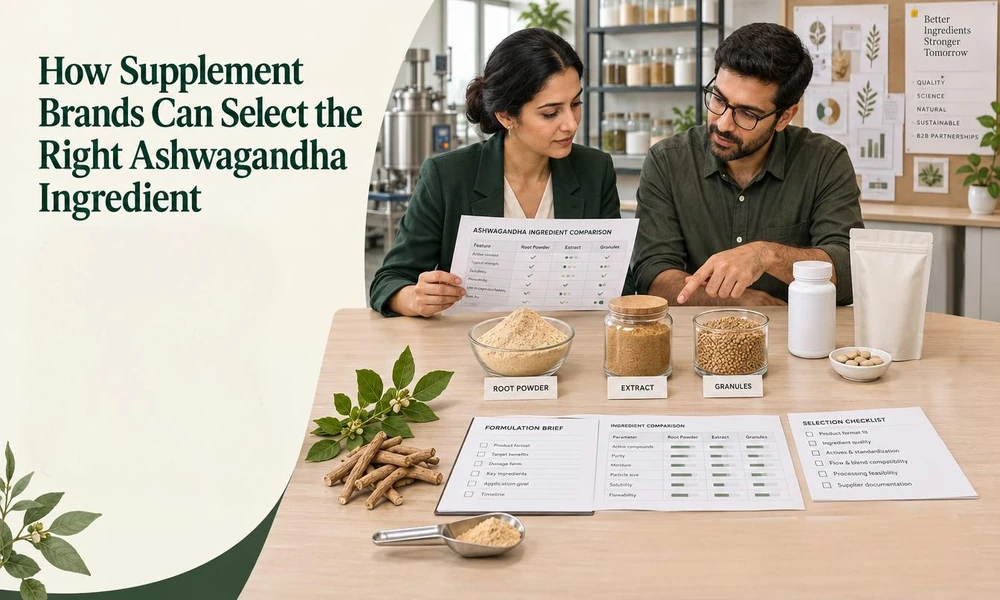
Selecting the right ashwagandha ingredient for supplements can be among the most important decisions taken by the brand as it affects the power, quality, and trustworthiness of the brand. Since there are various roots, leaves, and extracts of ashwagandha in the market, brands must have some criteria before settling on any particular supplier. The blog will explain the different factors that break down the practical factors on how the ingredient will behave in your formulation from standardization and format compatibility through batches and product lines.
Why Ingredient Selection Defines Your Product
The choice of the ingredients used shapes everything downstream from dosage accuracy, shelf stability, and perception of the product by buyers. The poor sourcing decisions become evident during the manufacturing process when there are questions of inconsistent strength or contamination. That is why it is important choosing ashwagandha raw material at an early stage will ensure the effectiveness of the finished product and safeguard the brand’s reputation before even filling any capsule.
Root vs Leaf Extract: What the Difference Means
Difference between ashwagandha root vs leaf extract, Formulators must learn this basic difference between these two extracts. The root extract is used only traditionally in ayurvedic formulations and usually contains a milder alkaloid content, whereas, root in combination with leaf extract, this herb can contain more withanolides concentrations yet is more bitter and variable. Brands must choose according to their target formula, taste level, and if they are targeting traditional-use positioning or standardized potency positioning.
Why Root-Only Is Often Preferred
Many formulators prefer pure roots since they follow traditional guidelines and are less harsh on the body during regular consumption. Sourcing bulk ashwagandha root powder from trusted growers enables brands to provide better control over consistency and traceability because the roots can be standardized better compared to a mixed plant extract from different regions and growing season.
Understanding Withanolides and Standardization
standardized ashwagandha withanolidesare what most manufacturers compare their products against when trying to convey potency on their product packaging. With standardization, each batch will be tested and standardized until it reaches a certain level of withanolides, which usually ranges from one and a half to ten percent depending on extraction method. This consistency allows formulators to accurately dose and buyers a way of comparison among various suppliers.
What Withanolide % Tells You (and What It Doesn’t)
Withanolide levels indicate concentration but not necessarily clinical equivalency, due to variations in the results produced by various test methods on the same compound. There is no assurance that the extract contains the same composition as what was used in s published research. Brands should ask for the test procedure along with the percent,not just the number itself, to make an informed comparison before finalizing a purchase.
Full-Spectrum Powder vs Standardized Extract
Another major consideration when making the decision is the choice between ashwagandha powder vs extract. Full-spectrum powders have all the phytochemicals of the herb intact and are preferred when positioning the product as a whole-herb extract, while standardized extracts are concentrated and have quantifiable withanolide levels ideal for clinical-style claims. Powders need more quantities to be taken, while extracts are better for smaller dosages, which becomes relevant when it comes to the number of capsules.
Matching Format to Your Product
The physical structure of the raw material itself is just as important to manufacturability as its potency. There are brands that use the ashwagandha root granules in order to make milling and mixing more convenient for tableting and encapsulating processes, as it flows through automated machinery and therefore can be easily milled and blended compared to powdered forms, decreasing dust losses and ensuring batch uniformity when mass producing.
Capsules, Tablets, Gummies, Beverages
Different delivery formats call for different raw material characteristics:
- Capsules: work well with both powder and extract; extract reduces capsule count
- Tablets: benefit from granulated or extract forms for better compression
- Gummies: require flavor-masked, low-bitterness extracts for palatability
- Beverages: need fully soluble, low-sediment extracts for clarity and taste
Certifications and Documentation to Require
The best ashwagandha extract for supplement brands always comes with verifiable documentation. Prior to finalizing a supplier, one should consider requesting for Certificate of Analysis and test results on heavy metals testing, microbials testing, verification from an independent third party lab, along with being certified as organic or non-GMO, if applicable. This would help ensure that there would be no regulatory problems and would assure consumers that their claims on the labels are the same as in reality.
Cost, MOQ, and Supply Reliability
Price is not the sole determining factor, but price should be considered together with consistency. A dependable bulk ashwagandha supplier for brands should offer transparent pricing, reasonable MOQ according to the brand’s production capacity, and documented stability of their supply chain. It is important for brands to ask suppliers about their lead time, harvest seasonality, and buffer stocks to prevent delays during peak seasons.
A Practical Selection Checklist
Before signing off on any supplier, run through this checklist:
- Confirm withanolide percentage and the testing method used
- Decide root-only versus root-and-leaf based on formulation goals
- Match raw material form to the production line
- Request CoA, heavy metal, and microbial test reports
- Supplier comparison on minimum order quantity, delivery time, and pricing
- Organic or non-GMO certification verification can be done if required
Frequently Asked Questions
Q: Should supplement brands choose ashwagandha root or root-and-leaf extract?
A: It depends on the purpose of your formulation. Root-only extract is ideal for producing products that are more traditional and gentle, whereas the root-and-leaf combination can provide more withanolides.
Q: What withanolide percentage should I look for?
A: Most brands target one and a half to five percent standardized withanolides, though potency-focused products may use up to ten percent. Always confirm whether testing used HPLC or spectrophotometric methods.
Q: Is standardized extract always better than full-spectrum root powder?
A: Not necessarily. Extract has measurable power, while full spectrum powder holds all of the plant’s natural constituents, something that some brands favor for their whole herb branding and uses.
Q: Which format works best for gummies and beverages?
A: Extracts that are water soluble and taste-masking extractions are the ideal choice because they blend well without the bitter and sediments often effects typically present in the powder forms of roots.
Q: What documentation should I request before ordering?
A: Certificate of Analysis, testing for heavy metals and microorganisms, laboratory analysis from a third party, and Organic/Non-GMO Certification should be requested if applicable.
Choosing a Certified Ashwagandha Supplier
Ultimately, the ideal partner will have all of these three qualities of transparency, standardization, and flexible format that can fit your particular range of products. Brands that make sure their sourcing process is certified and have a well-defined test process help minimize the risk of formulation and also build lasting trust among buyers. It is worth putting in extra effort in evaluating these aspects early on.
