

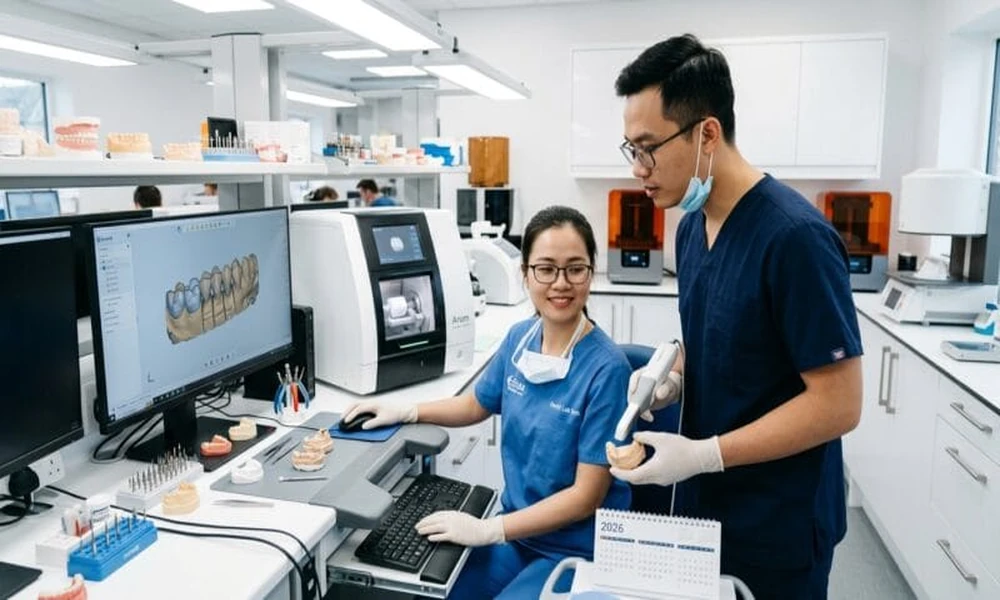
When you get a new crown, most of the actual design work happens somewhere you’ll never see, often not even in the same country as your dentist’s office. That’s not a red flag; it’s simply how a lot of modern dentistry works now, and understanding the process can make the whole experience feel a lot less mysterious.
It starts with a digital scan of your prepared tooth and the teeth around it. From there, that file is handed off to someone trained specifically in dental CAD (computer-aided design) software, a different skill set from clinical dentistry itself, closer to specialized 3D modeling. This person builds your crown virtually, shaping it to match your bite, blend with your neighboring teeth, and seal cleanly against the prepared tooth underneath.
This is genuinely detailed work. A margin that’s even a fraction of a millimeter off can mean bacteria sneaking underneath the crown later, or a bite that feels “off” and needs adjustment. Good designers check contact points with the teeth on either side, confirm the crown doesn’t interfere with how your jaw closes, and often have a second, more senior designer review the case before it’s approved.
Many dental practices don’t employ full-time CAD designers themselves, it’s a specialized skill that doesn’t make sense to staff for every clinic, especially smaller ones. Instead, they route cases through a dedicated dental cad hub that does nothing but this kind of design work, often handling cases from clinics all over the world on a rolling, around-the-clock basis.
The upshot for you as a patient is a crown that’s been checked by specialists focused entirely on getting the shape, fit, and function right, before a single piece of material is milled or printed. Your dentist still handles the parts that actually require being in the room with you, the exam, the prep, the fitting, but the design itself is increasingly a team effort spanning well beyond your dentist’s own building.
It’s a good reminder that modern dentistry is rarely a one-person job, even when it feels that way from the patient’s chair.
