

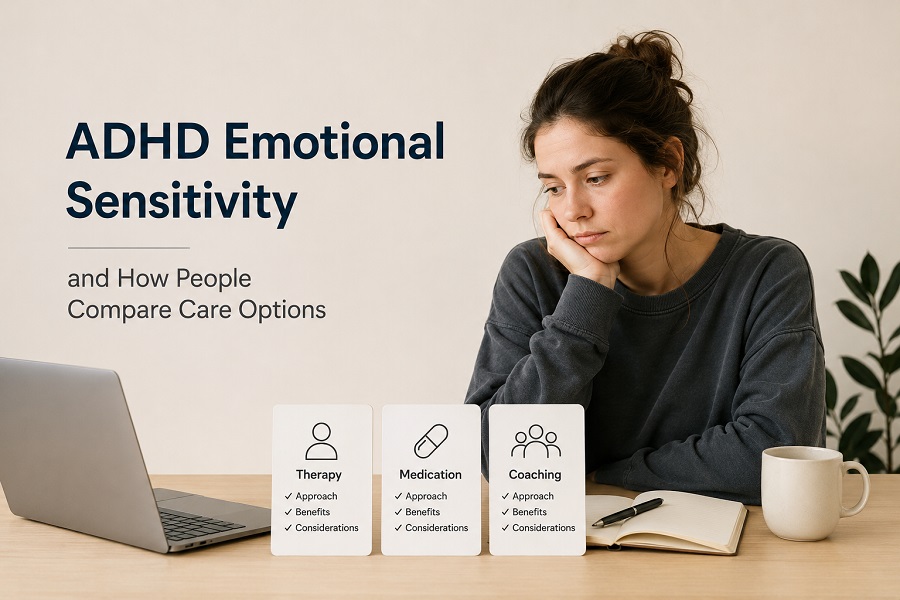
ADHD emotional sensitivity can feel confusing because it does not always look like the symptoms people expect. Someone may already know about distraction, restlessness, or impulsive decisions. Then a small criticism, a delayed text, or a tense conversation can feel much larger than it looks from the outside.
That is why people searching for what rejection sensitive dysphoria is are often trying to name a pattern that has been affecting work, relationships, school, or family life for years.
Why ADHD emotional sensitivity gets missed
ADHD is often described through attention and activity level. That can leave people with another set of problems feeling unseen. They may finish work late because focus is hard, but they may also spend the rest of the night replaying one sentence from a meeting.
A person may look calm in public and still feel flooded inside. Another person may react quickly, apologize later, and still feel ashamed. The emotional side can create problems that are hard to explain because the trigger may look small to everyone else.
ADHD emotional sensitivity does not mean someone is weak or dramatic. It means the nervous system may respond fast, hard, and with less room between the feeling and the reaction.
How rejection sensitivity can show up in daily life
Rejection sensitivity can appear after real rejection, but it can also appear when rejection is only suspected. A friend takes longer than usual to answer. A boss gives short feedback. A partner sounds tired. The person may know there are other explanations, yet the emotional response arrives first.
The reaction can be quick
The feeling may come with shame, fear, anger, embarrassment, or the urge to disappear. Some people become quiet and withdraw. Others explain too much, apologize several times, or try to fix the situation before they know what actually happened.
The hardest part is often the speed. A person may move from ordinary conversation to emotional pain before they can pause and check the facts.
Relationships can become harder to read
ADHD emotional sensitivity can make neutral signals feel personal. A short message may seem cold. A missed invitation may feel like proof of being unwanted. A normal disagreement may feel like the start of abandonment.
That can create a loop. The person seeks reassurance, avoids hard conversations, or becomes defensive. The other person may not know why the response feels so strong. Over time, both people may start walking carefully around each other.
Why people start comparing different care approaches
People usually begin with one question: what can make this easier to live with? That question can lead them to therapy, medication, coaching, lifestyle changes, ADHD education, or broader health conversations.
Some people also start comparing conventional care with whole-person care. They may want to know whether sleep, food, stress, movement, hormones, trauma history, or other health factors are playing a role. That search can be useful when it stays grounded and coordinated with qualified care.
It can become risky when someone is promised a simple fix or told to stop treatment that has been helping.
What standard ADHD care may include
Standard ADHD care may include medication, psychotherapy, skills-based support, coaching, school or workplace accommodations, and treatment for co-occurring anxiety, depression, sleep issues, or learning problems. The exact plan depends on age, symptoms, health history, goals, and what else is happening in the person’s life.
For emotional sensitivity, therapy can help people slow the reaction cycle. A therapist may work on thought patterns, communication, shame, conflict, trauma history, or emotional regulation. Medication may also reduce the intensity of ADHD symptoms for some people, which can lower the strain around daily triggers.
No plan should be copied from someone else’s experience online. ADHD care needs a real evaluation and follow-up.
Where whole-person care fits
Whole-person care looks at the person’s life beyond one symptom. Sleep, nutrition, stress, movement, social support, physical health, and mental health can all shape how someone feels and functions.
That does not mean every claim labeled “whole person” is sound. The label alone does not prove that a treatment is safe, evidence-based, or right for ADHD.
A careful comparison of functional medicine and integrative medicine can help people ask better questions before they spend money, start supplements, or add new providers to the care team.
Functional medicine and integrative medicine are not the same conversation
People often use these terms as if they mean the same thing. They can overlap, but they are not identical.
Integrative care usually refers to coordinated care that combines conventional treatment with complementary approaches when there is a reasonable basis for doing so. It should not replace needed medical or mental health treatment. The better version of integrative care keeps providers talking to each other and keeps safety in view.
Functional medicine can mean different things depending on the practitioner. Some people use the term to describe a broad search for root causes. Others use it in ways that may resemble naturopathic or non-mainstream care. That range makes it worth asking direct questions before starting.
The key question is coordination
For ADHD emotional sensitivity, coordination is the test. If one provider recommends medication, another recommends supplements, and another focuses on trauma therapy, someone needs to know the full picture.
Supplements can interact with medications. Sleep problems can worsen mood and attention. Anxiety can look like ADHD or travel with it. Emotional reactions may be shaped by past experiences, current stress, or relationship patterns.
Care works better when the plan is shared, not scattered.
Red flags when seeking care
People dealing with rejection sensitivity may be vulnerable to bold promises. When daily life feels painful, a fast answer can look appealing.
Be cautious if a provider promises a cure, dismisses ADHD medication across the board, sells expensive testing without explaining how results will change care, or discourages communication with your regular clinician. Also be careful with any plan that blames every emotional symptom on one food, one deficiency, one toxin, or one simple cause.
A good provider can explain limits. They can say what is known, what is uncertain, and what should be monitored.
How to prepare for an appointment
Before seeing a clinician, therapist, psychiatrist, or integrative provider, write down what actually happens during emotional spikes. Try to keep the notes plain.
Useful details include:
- What triggered the reaction
- How fast it came on
- What the body felt like
- What thoughts showed up
- How long it lasted
- What helped it settle
- Whether sleep, food, alcohol, stress, or conflict played a role
This gives the provider more than a label. It shows the pattern.
ADHD emotional sensitivity and self-advocacy
People with ADHD may feel embarrassed bringing up emotional sensitivity. They may worry a clinician will dismiss it or see it as overreacting. Still, the pattern deserves space in the conversation.
You can describe it without needing the perfect term. Say what happens. Say how often it happens. Say what it affects. Say whether it changes work, school, friendships, dating, parenting, or self-worth.
That kind of detail can guide care better than trying to prove one label fits.
FAQ
Is rejection sensitive dysphoria an official diagnosis?
Rejection sensitive dysphoria is not usually treated as a standalone formal diagnosis. People use the term to describe intense emotional pain tied to perceived or real rejection, often in connection with ADHD.
Can ADHD make emotions feel stronger?
Yes. Some people with ADHD report fast, intense emotional reactions, including anger, shame, embarrassment, worry, or hurt. These reactions can affect relationships, work, and self-confidence.
Should someone use integrative care for ADHD?
Integrative care may be useful when it supports, rather than replaces, standard medical and mental health care. The safest approach is to keep all providers informed and avoid unproven claims that promise a cure.
What should I ask a provider about functional medicine?
Ask what training they have, what evidence supports the plan, how they handle medications, what the costs are, what risks exist, and how they will coordinate with your primary doctor or mental health provider.
Key Takeaway
ADHD emotional sensitivity can affect more than mood. It can shape relationships, work, self-trust, and the way a person searches for care. Therapy, medication, lifestyle support, and whole-person care may all have a place, but the plan should stay coordinated and realistic. The better starting point is not a cure claim. It is a clear record of what happens, who is involved, and what support can be used safely.
Sources
Today’s Top Questions: What is Rejection Sensitive Dysphoria
Today’s Top Questions: Integrative vs. Functional Medicine
National Institute of Mental Health: Attention-Deficit/Hyperactivity Disorder
National Center for Complementary and Integrative Health: Complementary, Alternative, or Integrative Health
Verywell Health: Rejection Sensitive Dysphoria
