

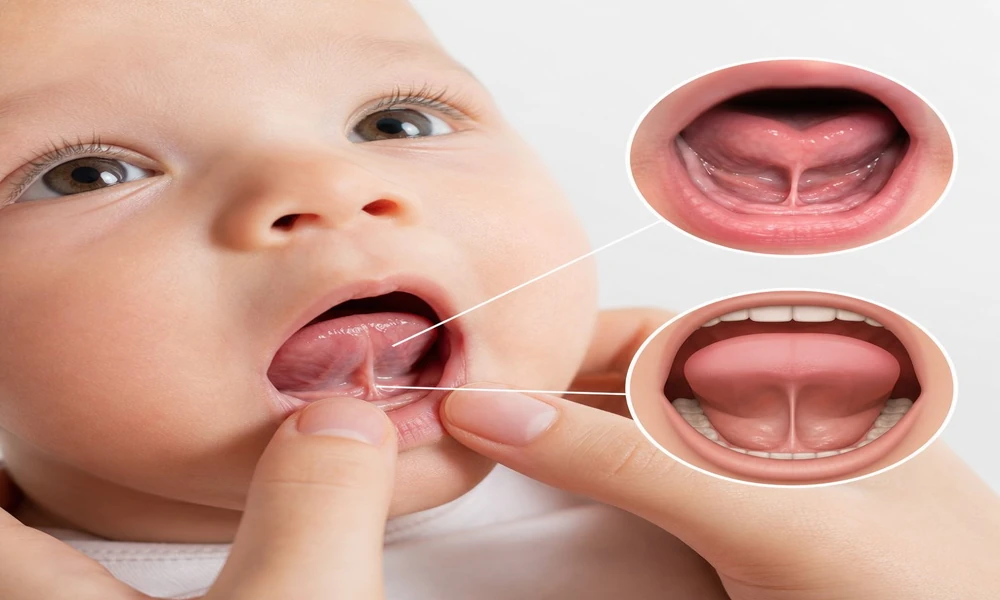
Tongue tie may be an elusive condition because it presents differently for every person. A baby might have a difficult time feeding, an older child might have trouble making certain speech sounds, or an adult might be experiencing oral or jaw tightness that has no clear cause. Not every case requires treatment but knowing the signs and how it can impact movement is the key to deciding when help may be appropriate.
What Is Tongue Tie?
Tongue tie, also known as ankyloglossia (as you can see at mayoclinic.org/diseases-conditions), occurs when the lingual frenulum, the band of soft tissue under the tongue that attaches it to the floor of the mouth, is short, thick, or too tight for full mobility. While most of us have a lingual frenulum, it’s only called a tongue tie when it hinders movement, such as the ability to lift it, move it from side to side, or extend it out of the mouth. In some cases, you may notice the condition when it’s hard for someone to lift or protrude their tongue, leaving the tip heart-shaped when exposed.
diagram of tongue tie and lingual frenulum
A tongue tie is congenital, which means it’s something a person is born with, though symptoms may manifest at different life stages. While infants may experience feeding problems immediately, others may exhibit symptoms later in childhood or even adulthood when demands on the tongue are higher for speech or eating.
Symptoms and Symptoms of Tongue Tie for Infants
Feeding relies heavily on tongue mobility in infants. They use their tongues to latch onto the breast or bottle as well as to move milk from the breast into their mouth. If it restricts the baby’s ability to move it during feeding, they may have a harder time eating. Symptoms may include:
- Inability to latch or a persistent inability to stay latched
- Clicking sound during breastfeeding
- Excessively long or frequent nursing sessions
- Difficulty gaining weight or slow milk flow
- Milk leaking from a baby’s mouth during feeding
- Fussiness during nursing or bottle feeding
- Pain in nursing mothers’ nipples or other injuries to them
As you can see, some of these signs could just as easily stem from other feeding issues. It is not enough to rely solely on a tongue tie checklist to diagnose the condition.
Children and Adults With Tongue Tie
Though it’s commonly talked about in relation to infants, it is not limited to children who aren’t yet talking. It can impact older children, teens, and adults. As oral skills develop, limited tongue mobility may become more noticeable to caregivers and patients themselves.
Those with a tongue tie can have issues speaking certain sounds, especially “t,” “d,” “l,” “n,” and “r,” as they require tongue tip mobility. Patients may also be messy eaters, have trouble getting food out from between their teeth, or have difficulty licking their lips. Sometimes the condition can cause tightness in the mouth, jaw, neck, or floor of the mouth. But like many of the symptoms discussed in the infant section of this resource, it can be present in many different ways, even some that don’t seem to be linked to tongue mobility. Some people with a tongue tie have no speech issues and can eat without any trouble, while others may need support.

child tongue mobility and speech development
The Importance of Function over Aesthetics
You shouldn’t be judging a tongue tie just by how it appears. Though the tissue may be visible, it might not be impacting function or it’s possible that the restriction is there but less obvious. When assessing a patient, it may be helpful to note things like:
- Whether the patient can move his or her tongue up, out, and side to side
- Any feeding issues in the infant
- Any speech or oral motor skill issues in children
- Any concerns with jaw health, teeth, or airway
- Any areas of the face or body that feel tight, hurt, or fatigued after use
Tongue Tie Treatment
Treatment could come in the form of therapy, a tongue tie release (discover this), or some combination of the two. Tongue tie release may also be referred to as a frenotomy or frenectomy depending on the type and extent of the procedure performed. Babies with tongue tie may experience an improved latch and increased milk transfer if it’s determined the condition is a factor in feeding. For older children and adults, therapy might be prescribed before and/or after the release procedure to help the tongue acclimate and optimize its newly found range of motion.
Next Steps
A tongue tie is more than a matter of how the tissue looks on the inside of the mouth, it’s also about whether the patient has mobility restrictions and if those restrictions are affecting their everyday life. The most important action to take when this is suspected is to have a careful evaluation to determine whether it is impacting the patient’s function. Armed with information, families and individuals can better determine whether they want to wait, pursue therapy, have a procedure, or a combination of those interventions to address tongue tie.
