

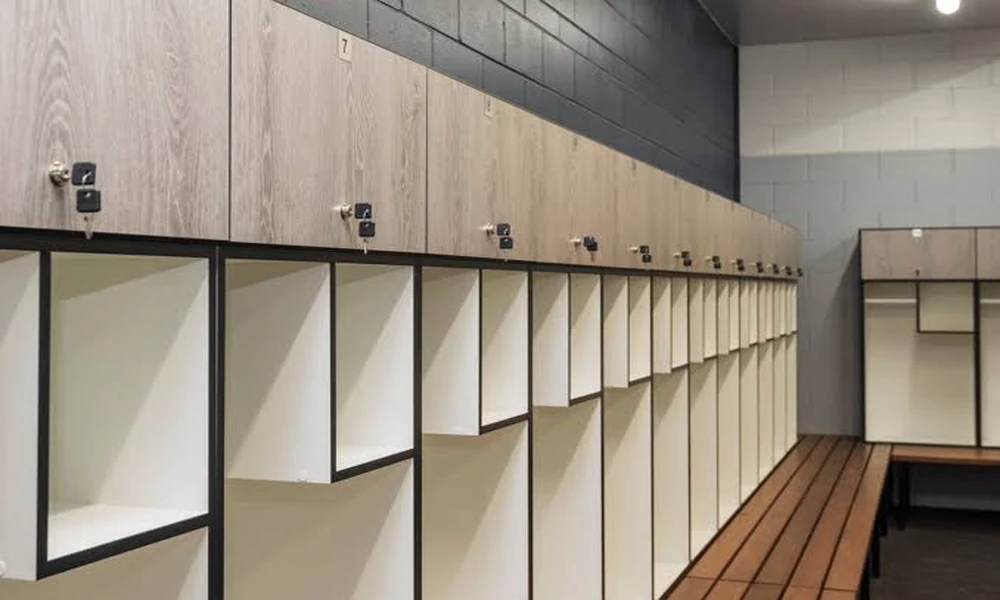
Athletic locker rooms are among the harshest interior environments in any building. More than eight million students participated in high school sports in the United States during the 2023 to 2024 school year (National Federation of State High School Associations), and nearly all of them store damp uniforms, pads, and shoes in a locker after practice. Heat, humidity, and wet gear test locker materials every day of the season.
Why is humidity so hard on lockers?
Humidity is hard on lockers because moisture never fully leaves an athletic locker room. Showers, wet towels, and sweaty equipment keep the air damp, and lockers with poor ventilation trap that moisture inside. Over time, damp conditions encourage odor, mildew, and surface damage that shorten the life of the locker and the gear inside it.
Why does moisture control matter for mold?
Moisture control matters because mold needs moisture to grow, and controlling dampness is the key to controlling mold indoors (Environmental Protection Agency). Lockers that let gear dry quickly reduce one of the most persistent moisture sources in an athletic facility.
How are lockers being engineered for wet equipment?
Lockers for wet equipment are now engineered around moisture-proof materials and airflow. Solid plastic pro lockers use high-density polyethylene that is impermeable to moisture, come standard with ventilated doors, and are built with a one-inch-thick footlocker and seat and half-inch-thick components elsewhere, backed by a 20-year warranty because they will never rust, rot, or corrode (ASI Storage Solutions).
Why do ventilated doors help?
Ventilated doors help because they let air circulate through the locker instead of trapping damp air around stored gear. Faster drying reduces odor and keeps equipment in better condition between practices and games.
What does a footlocker add?
A footlocker adds a separate compartment for shoes, pads, and bulky gear. Full-width openings make it easier to load large equipment, and an integrated seat gives athletes a place to dress without crowding the aisle.
How do lockers affect infection prevention in athletics?
Lockers affect infection prevention because athletic settings combine skin contact, shared equipment, and shared surfaces. Bacteria such as MRSA can spread among athletes through contact with skin and with contaminated items and surfaces (Centers for Disease Control and Prevention). Lockers that clean easily and resist moisture make routine disinfection more effective.
Which cleaning practices help most?
Four cleaning practices help keep athletic locker rooms healthier:
- Disinfecting locker handles, benches, and seats on a set schedule
- Encouraging athletes to remove and wash gear frequently
- Keeping drains clear and floors dry between sessions
- Choosing locker materials that tolerate common cleaning agents
Which other factors should facility managers weigh?
Facility managers should also weigh security, graffiti resistance, and color. High-density polyethylene resists graffiti and common cleaning agents, which keeps lockers looking new in high-use and abusive environments. Security boxes on the top shelf give athletes a place for phones, wallets, and keys during practice.
How do lockers support team culture?
Lockers support team culture by giving every athlete a dedicated, well-kept space. Team colors, nameplates, and organized storage turn a locker room into a source of pride rather than just a place to change.
How does locker room ventilation work alongside locker design?
Locker room ventilation works alongside locker design by removing the moisture that lockers release. Even the best ventilated locker relies on exhaust fans, dehumidification, and air movement in the room to carry damp air away. Coordinating locker placement with supply and exhaust locations keeps airflow moving past every row.
How often should athletic lockers be inspected?
Athletic lockers should be inspected at least before each season. Checking hinges, latches, vents, and fasteners catches loose parts before they fail during the busiest weeks of the year.
What is the takeaway for athletic facilities?
Material choice determines how well lockers survive humid, high-use athletic environments. Facilities that pair moisture-proof, ventilated lockers with good room ventilation and steady cleaning routines protect equipment, reduce odor, and give athletes a locker room that lasts.
